



Catch up on our recent panel event in Sydney on psychosocial risk
Page Published Date:
June 5, 2026
What came out of our Sydney panel on performance and psychosocial risk
The Next Step recently co-hosted an event with
The Safe Step at
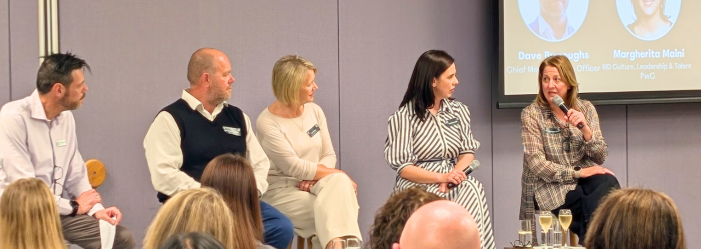
PwC's offices in Barangaroo. The room had senior HR and people leaders from across industries. The topic was one that keeps coming up in nearly every conversation we have with clients: how do you hold people accountable and drive performance while genuinely reducing psychosocial risk? It was a and engaging and insightful event. Here's what stood out.
Managers need language, not just training
Danielle Odd, Director of Wellbeing, Health and Safety at PwC, shared a story that landed well with the room. Her team rolled out a check-in framework called SMART — Stimulation, Mastery, Agency, Relationships, Tolerable demands — developed with Curtin University's Future of Work Institute.
A manager used it in a regular one-on-one. Working through the framework, he discovered his team member was struggling with a university unit, quietly considering a move to a client, and feeling overwhelmed. He helped with all three. Afterwards he told Danielle: "If I didn't have that language, we would have lost her."
Rather than more training, it's about giving managers something concrete enough to use in an ordinary conversation.
Role design is where a lot of performance problems actually start
Margherita Maini, Managing Director of Culture, Leadership and Talent at PwC, described an independent cultural assessment done at the start of PwC's culture transformation. Role conflict and unclear decision-making came up as two of the strongest sources of frustration across the business.
Dave Burroughs, Chief Mental Health Officer at Westpac and Principal Psychologist at Australian Psychological Services, put a number to it. A 300-person leadership team was losing 1,800 hours a week to work that existed because of role confusion caused by poor change management. The annual cost: $25 million. The fix wasn't more headcount. It was better job design.
For people leaders, this is a useful reframe. When teams are stretched and performance is dipping, the instinct is often to add resources or increase oversight. Role clarity is frequently a more direct lever.
The "high performance" conversation is overdue
Jo Cairns, Chief People Officer at Team Global Express, described a talent review where a leader had flagged certain people as top performers because they worked the longest hours and were online at weekends. That definition got pushed back on.
Jo was clear about TGE's position: high performance means delivering outcomes, not logging hours. Danielle and Margherita echoed this. When long hours become a cultural badge, it tends to mask unsustainable work practices and make them harder to challenge.
Dave offered a useful analogy: elite athletes build rest and recovery into their performance model. It's not separate from high performance; it's part of what makes it sustainable.
HR and safety working together isn't a nice-to-have
Jo described TGE's model: people and safety co-design programs together, share accountability to governance committees, and maintain dedicated forums to stay aligned. "If people only worry about their own silo, people fall through the cracks."
Danielle's team at PwC sits within the same function as culture and talent. That structure means psychosocial risk gets treated as a people and culture issue from the start, rather than something escalated to safety after the fact.
If your HR and safety teams are still operating largely independently, that's worth revisiting.
Where to from here?
The panel was honest that most organisations are still building capability in this space. Danielle summed it up well: "I don't know either. But if we do the same thing, we'll get the same outcome. We've got to try something."
The organisations making progress are starting with practical tools for managers, looking hard at how roles are designed, and bringing HR and safety into the same conversation.
If you'd like to talk through what that looks like for your organisation, reach out to The Next Step.
Looking for a new role?
Search HR jobs
Need help filling a position?
Contact Us
Other articles you might be interested in

Why Psychosocial Risk requires collective and collaborative ownership

What Hassell's 2026 Workplace Report Means for HR Leaders | The Next Step

AI is reshaping HR, but what happens when gender bias is built into the technology? CEO, Aaron Neilson explores AI, gender disparity and the future of HR.