



Beyond the Risk Assessment: Key HR Takeaways
The Next Step
Page Published Date:
August 17, 2026
Beyond Compliance: Five things HR leaders took from 'Beyond the Risk Assessment' event in Melbourne
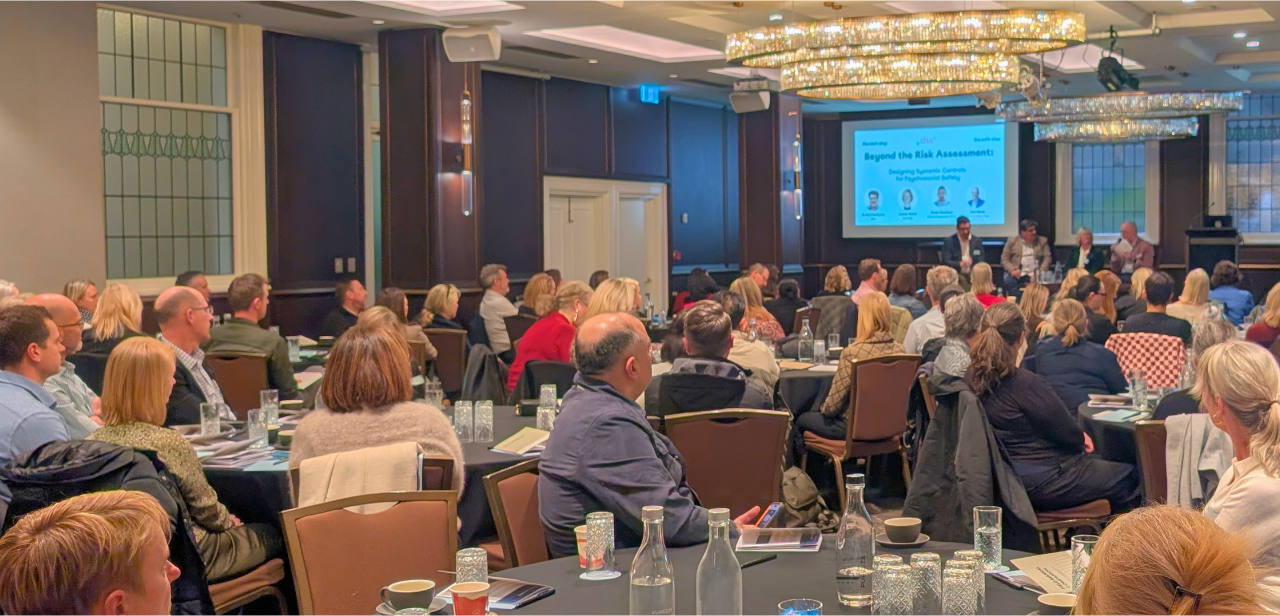
Last night, The Next Step and The Safe Step co-hosted an event in Melbourne with dss+, bringing together around 100 senior HR and HSE professionals to talk about psychosocial risk. The panel included Dr Rod Gutierrez (dss+), Wade Needham (PSP Investments, Perfection Fresh), Jackie Walsh (Bunnings), facilitated by Rod Maule (The Strategic Step Advisory).
The conversation moved quickly past risk assessments and into what happens next. Here's what stood out for HR.
1. The risk assessment is the entry point, not the finish line
Dr Rod Gutierrez put it plainly: regulators aren't asking to see your diagrams. They want to know how your system of work is actually managing psychosocial risk day to day. A completed risk register with no operational follow-through won't hold up.
2. "Safeguarding" is a different question to "tolerance"
Physical safety asks how much exposure is tolerable. Psychosocial safety doesn't work that way, because risk depends on the person, not just the hazard. Dr Rod argued for a safeguarding approach instead: identifying the small number of things that must never be allowed to happen, and building controls around those, rather than trying to set a tolerance threshold for everyone.
3. Interpersonal conflict is the single biggest predictor of psychological injury
From his own research reviewing hundreds of psychological injury claims, Dr Rod found the pattern wasn't workload on its own. It was interpersonal issues, often combined with other pressures. That makes conflict, particularly conflict where someone is personally targeted, a genuine control point rather than a soft HR issue.
4. Ownership has to be shared, not parked with one function
Jackie Walsh described allocating risk owners across psychosocial hazards at Bunnings and finding that almost none of them sat neatly in safety.
The panel's consistent message: HR designs many of the controls, operations owns and implements them, and safety holds the assessment and evaluation process. When those three don't connect, the whole thing stalls.
5. Surveys tell you where to look, not what's actually happening
Jackie's team runs regular engagement surveys, but she was clear they're a starting point, not the answer. Bunnings supplements survey data with direct, unstructured conversations with frontline leaders and teams, "Boss on the Couch" sessions over a coffee, to find out what's really going on at store level. Several attendees echoed this from their own risk assessment work: high-level findings often mask very different pictures on the ground, and the more effective organisations are the ones prepared to dig into specific hotspots rather than treat the risk register as one homogenous exercise.
The takeaway for HR
Victoria's OHS (Psychological Health) Regulations, in effect since December 2025, have raised the bar on what "reasonably practicable" looks like. The room's shared view was that the compliance box is easier to tick than the operational reality is to build. If you'd like to talk through what that looks like for your organisation, get in touch with our team.
Looking for a new role?
Search HR jobs
Need help filling a position?
Contact Us
Other articles you might be interested in

What Hassell's 2026 Workplace Report Means for HR Leaders | The Next Step

AI is reshaping HR, but what happens when gender bias is built into the technology? CEO, Aaron Neilson explores AI, gender disparity and the future of HR.

How do you choose the right recruitment agency? The Next Step explores what to look for when deciding on an HR partner for talent sourcing.