



Workforce Compliance is getting harder, it starts with who you hire
Merridy Thomas
Page Published Date:
November 23, 2026
I read Mark Coyle's recent piece in HR Leader on workforce compliance and found myself nodding along. His view is that adding more policies, processes and audits rarely gives organisations more control. Instead, fewer, better connected systems are often the answer.
I agree. But from where I sit, working with HR leaders every day, I would add another layer to the conversation. Systems do not manage risk. People do.

The organisations getting ahead are not just investing in better technology. They are investing in HR leaders who understand where compliance risks sit, can connect the dots across payroll, workforce planning, AI and governance, and can confidently explain those risks to an executive team or board.
Increasingly, compliance is not a process issue. It is a capability issue.
Three changes in under two years
The rules have shifted quickly, and each change lands on HR.
- Wage theft is now a crime. Since 1 January 2025, intentional underpayment has been a criminal offence under the Fair Work Act. Individuals face up to 10 years' imprisonment.
- Super is now a payroll task. Since 1 July 2026, Payday Super has required employers to pay super at the same time as wages.
- AI decisions must be disclosed. From 10 December 2026, organisations must explain in their privacy policy where a computer program makes or informs decisions that significantly affect people.
As Mark points out, most underpayments start as admin errors. A casual's hours logged under the wrong award. A contractor set up under the wrong classification. These mistakes happen when processes are spread across teams and vendors, and nobody owns the whole picture.
What we're seeing in the market
One of the privileges of recruitment is that you get a front row seat to what is keeping leaders awake at night. The conversations we are having with Chief People Officers and HR Directors today are noticeably different to those of even two years ago.
Payroll accuracy, workforce systems, contractor management and AI governance were once viewed as specialist or operational responsibilities. Today they are appearing in leadership role briefs and board discussions.
- The question is no longer "Who owns payroll?"
- The question is "Who owns the risk?"
AI adds a new layer
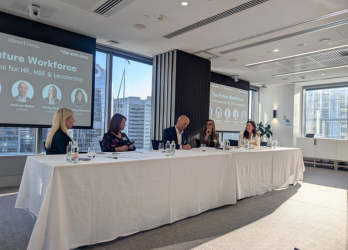
At our Future Workforce event with MinterEllison earlier this month, the panel spent a lot of time on AI governance. Stacey Edmonds, founder of Lively, asked the room how many people had an AI policy, had read it, and understood it.
"It's more than a policy." - Stacey Edmonds
Her point links directly to the new privacy rules. If you don't know which tools your people use, or where AI is shaping decisions about candidates and employees, you can't disclose it.
We're seeing this show up in role briefs too.
"AI is no longer a future conversation. It is already making decisions, influencing decisions or supporting decisions in most workplaces.
HR leaders are looking for people who understand both the opportunities and the governance responsibilities that come with it.”
- Merridy Thomas
The tools are already in most workplaces. HR needs a clear position on what is ethical, and the capability to hold that line.
Capability is the gap
Simplifying systems helps. Someone still has to decide which systems, who owns them, and how they are checked.
That's where we see the real gap.
"You can simplify systems, consolidate vendors and automate processes, but someone still needs to understand the data,
challenge what does not look right and take accountability for the outcome. That capability cannot be automated."
- Merridy Thomas
Cathy Doyle, CPO at NobleOak, made a similar point at the event.
"Good old HR might have to get back into work design. Just when you think you're out of it, you're back in it." - Cathy Doyle
What HR leaders can do now
- Map how you engage people. List every worker type, jurisdiction and vendor. Note who owns each record.
- Check your payroll against Payday Super. Confirm super is reaching funds on time for every pay cycle.
- Find where AI informs people decisions. Include recruitment screening, rostering and performance tools. Your privacy policy needs to reflect this by 10 December.
- Look at capability as well as systems. Ask whether your HR team has the skills to own compliance across payroll, data and AI. If there are gaps, plan for them in your next hire.
- Work across functions. Payroll, legal, IT and HSE all hold part of the picture.
In Closing
Mark is right. Better connected systems reduce complexity and lower risk.
But technology on its own will not solve workforce compliance.
The organisations doing this well are combining strong systems with capable people who understand governance, workforce risk, payroll, data and increasingly AI.
From a recruitment perspective, we are seeing a clear shift. The most sought after HR leaders are no longer just culture builders and business partners. They are also risk managers, translators and trusted advisers who can help organisations navigate an increasingly complex landscape.
As compliance obligations continue to evolve, one thing is becoming clear: the strongest defence is not simply having the right system. It is having the right people asking the right questions.
Sources
- Mark Coyle, Workforce compliance is getting riskier, HR Leader, 9 November 2026
- DEWR, New wage theft criminal offence commences 1 January 2025
- ATO, ATO calls on employers to prepare for Payday Super
- OAIC, New resources on transparency for use of AI and automated decision-making
Looking for a new role?
Search HR jobs
Need help filling a position?
Contact Us
Other articles you might be interested in

Lisa Hammond from The Next Step explores what the Global Workplace Joy Index means for Australian HR leaders, unpacking the perception gap on employee engagement and retention.
What does the future workforce mean for HR? Key takeaways from our panel with MinterEllison, covering the shift to checking AI output, shrinking junior roles, AI governance, employee surveillance and HR’s return to work design.

Even a ‘just coffee’ catch-up counts. Geraldine Doyle shares practical interview preparation tips to help HR leaders build rapport and stand out.